
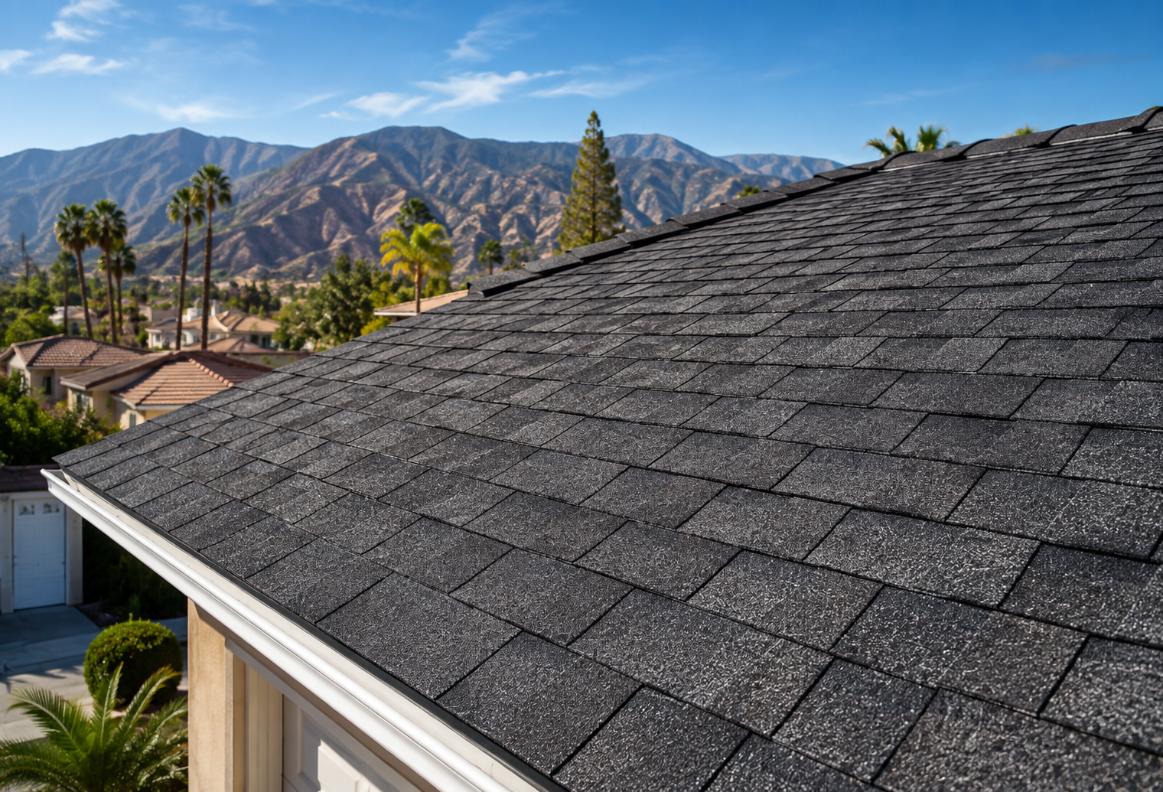
Composition shingle roofs in San Dimas face long stretches of sun, summer heat, seasonal winds, and occasional heavy rain. Over time, those conditions can dry out shingles, weaken exposed edges, and turn relatively small roofing problems into reasons to consider reroofing.
Quick answer: A composition shingle roof should generally be considered for reroofing when widespread aging or deterioration makes continued repairs less practical. Age matters, but visible condition matters more. Curling or missing shingles, significant granule loss, repeated leaks, brittle roofing material, and deterioration across multiple roof sections can all indicate that it is time for a professional evaluation.
What local homeowners should know
-
A roof does not need to leak throughout the house before reroofing becomes a reasonable option.
-
Strong Southern California sun and repeated heating and cooling can contribute to long-term shingle deterioration.
-
Wind exposure around San Dimas and the surrounding foothill communities can loosen already aging roofing materials.
-
A problem limited to one small section may be repairable, while widespread deterioration can make reroofing more practical.
-
An inspection can help distinguish between isolated storm damage, normal aging, and a roof approaching the end of its useful service life.
Why Does Reroofing Timing Matter in San Dimas?
Reroofing timing matters in San Dimas because replacing a deteriorated roof before widespread water intrusion develops can help property owners avoid additional damage to roof decking, insulation, ceilings, and other building materials. The goal is not to replace a usable roof prematurely, but to recognize when repairs are no longer addressing the underlying condition.
Properties throughout Los Angeles County experience substantial sun exposure for much of the year. Roofs near Via Verde, Puddingstone Reservoir, Bonelli Regional Park, and the foothill areas can also experience varying levels of wind exposure depending on elevation and surroundings.
Dowd Roofing can evaluate the condition of a composition shingle roof and help determine whether repair or reroofing is the more appropriate direction. We look at the roof as a complete system rather than making that decision from age alone.
What Local Roof Conditions Should Homeowners Pay Attention To?
Local homeowners should pay particular attention to heat-related aging, granule loss, brittle shingles, wind damage, flashing problems, and evidence of water intrusion. These conditions can develop gradually, which means a roof may be declining before an obvious ceiling leak appears inside the home.
In the San Gabriel Valley, prolonged sun exposure can gradually affect asphalt-based roofing materials. Seasonal wind can then place additional stress on shingles that have already become brittle or poorly sealed.
A roof’s exposure also varies from property to property. Trees, nearby structures, roof orientation, slope, ventilation, and elevation can all influence how roofing materials age.
What Are the Warning Signs That a Composition Roof May Need Reroofing?
The clearest warning signs are widespread shingle deterioration, recurring leaks, missing roofing material, substantial granule loss, and damage affecting multiple areas rather than one isolated spot. Any single symptom does not automatically mean replacement is necessary, but several occurring together justify a closer inspection.
Watch for:
-
Shingles that are curling, cracking, lifting, or breaking.
-
Bald-looking areas where substantial surface granules have worn away.
-
Multiple missing or displaced shingles after windy weather.
-
Repeated leaks even after previous roof repairs.
-
Water stains or discoloration on ceilings or inside the attic.
-
Soft or visibly deteriorated areas of the roof deck.
-
Damaged flashing around chimneys, walls, skylights, or roof penetrations.
-
Roofing material that feels noticeably brittle or shows deterioration across several slopes.
Checking from the ground is safer than walking on an aging composition roof.
When Should You Call a Roofing Professional?
You should call a roofing professional when deterioration is widespread, a leak has appeared, shingles are repeatedly coming loose, or you cannot determine whether a repair will provide a reasonable solution. Professional inspection becomes especially useful when a roof has several symptoms at the same time.
Homeowners can safely look for missing shingles from the ground, inspect ceilings for stains, and check accessible attic areas for signs of moisture. Avoid climbing onto a steep, wet, damaged, or brittle roof.
For homes in San Dimas, scheduling an evaluation before the rainy season can also provide time to address known weaknesses before a storm exposes them.
What Commonly Causes Composition Shingle Roofs to Wear Out Locally?
Composition shingle roofs locally tend to deteriorate through a combination of prolonged sun exposure, heat, wind, moisture events, and ordinary material aging. Installation details, ventilation, drainage, roof orientation, and previous repairs can also influence how quickly individual roofs develop problems.
1. Sun and heat: Southern California roofs receive substantial solar exposure, which can contribute to gradual aging of asphalt shingles.
2. Wind: Seasonal winds can lift loose edges and expose weaknesses in older roofing materials.
3. Rain: Rain may reveal vulnerabilities around flashing, penetrations, valleys, and deteriorated shingles.
4. Drainage problems: Leaves and debris in gutters or roof valleys can interfere with proper water movement.
5. Normal aging: Even a roof without major storm damage eventually experiences material wear.
These factors can vary between San Dimas, La Verne, Glendora, Covina, and other nearby communities.
How Can You Extend the Useful Life of a Composition Roof?
You can help extend a composition roof’s useful life by keeping drainage paths clear, addressing small defects promptly, limiting debris accumulation, and having questionable areas evaluated before they become larger problems. Preventive attention is particularly useful before periods of rain or strong seasonal winds.
Homeowners can periodically inspect the roof from the ground and look for visible changes. Keep gutters and downspouts functioning, and watch for tree branches rubbing against roofing materials.
Inside the home, stains, damp odors, or moisture in an accessible attic deserve attention. DIY maintenance should stop where climbing, roofing removal, flashing work, or leak diagnosis creates a safety or property-damage risk.
What Results Can You Expect From Reroofing?
A properly planned reroofing project replaces deteriorated roofing materials and gives the roof a renewed weather-shedding surface, while also creating an opportunity to identify conditions that were hidden beneath the old roofing. The exact scope depends on the existing roof and what is discovered during evaluation and removal.
Reroofing can address widespread deterioration that individual repairs cannot reasonably solve. It can also provide more predictability than repeatedly repairing different areas of an aging roof.
The appropriate materials and project scope should be based on the specific home rather than assumptions based solely on neighborhood or roof age.
What Mistakes Should San Dimas Homeowners Avoid?
San Dimas homeowners should avoid judging a roof only by age, waiting for major interior leakage, repeatedly patching widespread deterioration, or walking on brittle shingles to inspect them. A better approach is to evaluate the overall condition and make repair or replacement decisions based on the extent of deterioration.
Mistake: Assuming every older roof automatically needs replacement.
Consequence: A homeowner may consider reroofing before it is actually necessary.
Better approach: Evaluate the material condition and roof system.
Mistake: Repairing one leak after another without considering the overall roof.
Consequence: Repair costs can accumulate while deterioration continues elsewhere.
Better approach: Ask whether the defects are isolated or widespread.
Mistake: Waiting for visible ceiling damage.
Consequence: Water may affect materials beneath the roofing before an obvious indoor symptom develops.
Better approach: Investigate exterior warning signs early.
What Does a Common Local Reroofing Scenario Look Like?
A common local scenario involves an older composition roof that still appears intact from the street but shows granule loss, brittle shingles, lifted edges, and several previous repair areas when examined more closely. This is not automatically a reroofing situation, but it is a strong reason to compare repair with replacement.
For example, a San Dimas homeowner may first notice a few shingles out of place following windy weather. Inspection may show that the problem is limited to a small area, making repair worth considering. If similar deterioration exists across several slopes, reroofing may provide a more appropriate long-term solution.
Which Roofing Services Can Address These Problems?
Roof inspection, targeted repair, and reroofing address different stages of composition shingle deterioration, so the right service depends on whether the problem is isolated or widespread. Inspection establishes the roof’s condition, repairs address localized defects, and reroofing replaces roofing that has deteriorated beyond practical spot repairs.
Should You Repair or Reroof a Composition Shingle Roof?
Repair is usually more appropriate for localized damage on an otherwise serviceable roof, while reroofing becomes more reasonable when deterioration is widespread or repairs are becoming repetitive. The decision should account for roof condition, leak history, damaged areas, and the expected usefulness of another repair.
A few displaced shingles after a wind event are different from cracking and granule loss across most of the roof. Likewise, one flashing leak does not necessarily mean the entire roofing system has failed.
The best option is the one that addresses the actual condition without doing too little or replacing serviceable material unnecessarily.
What Areas Do We Serve Around San Dimas?
Our local roofing work can support property owners in San Dimas and surrounding communities where composition shingle roofs face similar Southern California weather conditions. Nearby areas include La Verne, Glendora, Covina, and other communities across this part of the San Gabriel Valley.
Local conditions can still vary by roof orientation, elevation, tree coverage, and property design, so each roof should be evaluated individually.
What Can Happen If You Wait Too Long to Reroof?
Waiting too long can allow deteriorated roofing to become more vulnerable to water intrusion, wind damage, and damage to materials beneath the shingles. A roof that could have been addressed through planned work may become a more urgent problem if leaks develop during rainy or windy weather.
Water intrusion can potentially affect roof decking, attic insulation, ceilings, and interior finishes. That does not mean every worn shingle creates an emergency, but widespread deterioration is worth addressing before the next weather event determines the schedule for you.
FAQ About Composition Shingle Reroofing
How do I know if my composition roof in San Dimas needs replacement?
Look for widespread deterioration rather than relying on roof age alone. Curling, cracking, significant granule loss, repeated leaks, missing shingles, and brittle material across multiple roof sections can point toward reroofing. A professional inspection can determine whether these symptoms are isolated enough for repair or widespread enough to justify replacement.
Should I replace my San Dimas roof before it starts leaking?
Yes, replacement can be appropriate before leakage begins if the roof already shows widespread deterioration. Waiting for an interior leak is not necessary to confirm that roofing material is nearing the end of useful service. The better decision point is the roof’s overall condition and whether repairs remain practical.
Does Southern California heat affect composition shingles?
Yes, prolonged sun and heat contribute to the normal aging of asphalt-based composition shingles. Roof orientation, ventilation, shade, slope, and material condition can influence how that exposure affects an individual property. That is why two homes in the San Gabriel Valley may not need reroofing at the same time.
Can wind damage mean I need an entirely new roof?
Not necessarily, because isolated wind damage may be repairable if the surrounding roofing remains in serviceable condition. If wind exposes widespread brittleness, loose shingles, or deterioration across several roof slopes, reroofing may deserve consideration. The extent of the damage matters more than the presence of one missing shingle.
Is fall a good time to inspect a roof in San Dimas?
Fall can be a useful time to check roof condition before periods of seasonal rain. An inspection can identify loose shingles, questionable flashing, debris accumulation, and other vulnerabilities while there is still time to plan repairs. Roofing concerns should be addressed when discovered rather than delayed solely for a particular season.
Can I inspect my own composition shingle roof?
You can perform a basic visual check from the ground and inspect accessible interior areas for signs of moisture. Avoid walking on an aging or brittle composition roof, particularly when it is steep or damaged. A roofing professional can inspect areas that cannot be evaluated safely from ground level.
Is reroofing always better than repairing an older roof?
No, reroofing is not automatically better simply because a roof is older. A localized defect may still be a good candidate for repair when the remaining roofing is serviceable. Replacement becomes more compelling when deterioration is widespread, leaks recur, or repairs are addressing one failing section after another.
Do homes near the San Dimas foothills have different roofing concerns?
They can, because individual properties may experience different sun, wind, tree, and elevation exposure. A foothill home’s roof condition should still be assessed individually rather than assumed from its location. Roof orientation, surrounding vegetation, drainage, construction details, and previous maintenance can all affect deterioration.
Plan Your Reroof Before Roof Problems Set the Schedule
A composition shingle roof does not have to reach the point of major leakage before replacement makes sense. For local homeowners, watching the roof’s overall condition and responding to widespread deterioration can make reroofing a planned property improvement rather than an unexpected response to damage.
Protect Your San Dimas Home With the Right Roofing Plan
We can help you understand the condition of your composition shingle roof and whether repair or reroofing is the appropriate next step.